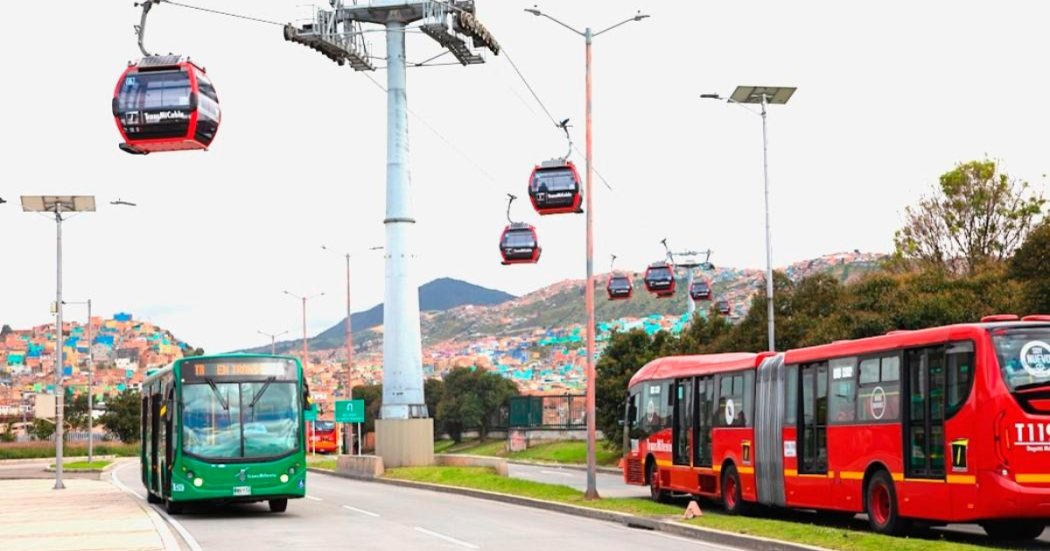
Bogota threw a birthday party for a system most people love and complain about in the same breath. TransMilenio turned 25, and that number mattered because it marked a full generation of commuting, rushing, and learning city rules in real time.
Back in 2000, the idea sounded bold, fast buses with their own lanes, quick stations, and a more organized ride. By 2025, it had become a daily routine for millions, and a global case study for other cities.
From day one to today
TransMilenio’s first ride happened on December 18, 2000, on the Caracas and Calle 80 trunk lines. It launched with 14 articulated buses and moved 18,618 passengers that first day, starting what Bogota later called a transport revolution.
By its 25th anniversary, the operation looked nothing like that early snapshot. Official figures described more than four million trips per day, a fleet of 10,509 buses, and 143 TransMiCable cabins, backed by roughly 35,000 workers.
The system also laid out clear “phases” that explained how it expanded: new trunks in 2003, more corridors in 2012, fleet renewal from 2016 to 2019, and a stronger push into electric buses after 2019.
A system that stitched the city
One reason TransMilenio lasted is simple, it connected neighborhoods that needed faster access to jobs, schools, and services. Bogota framed it as more than buses and stations, a backbone that shortened distances and opened opportunities across a growing city.
A big turning point was integration. With the TuLlave card, riders can use a single fare window of 125 minutes and make zero-peso transfers between the zonal component, trunk lines, and TransMiCable, which the city linked to fairness and access.
There was also a culture side that rarely shows up on maps. The system promoted habits like lining up, giving up seats, and caring for stations, and it even turned parts of the network into public art, with 174 murals and 194 totems.
Tech, cables, and cleaner buses
Bogota also sold TransMilenio as a “workshop” that other cities came to study. In 2025 alone, the system hosted 69 visits, including 30 international delegations, many curious about TransMiCable, control centers, and how the BRT runs at high demand.
The cable cars became a symbol of mobility as inclusion. Bogota argued that connecting hillside areas through TransMiCable changed travel times and neighborhood development, and it tied that approach to an international recognition linked to the San Cristobal cable integration model.
On sustainability, the numbers told a clear story. The system listed 1,486 electric buses inside a 10,482-bus total fleet, and it projected 705 more electric buses arriving in 2026 and 2027, pointing to cleaner trips as a future priority.
The hard parts riders still feel
A birthday does not erase the headaches. Bogota highlighted that TransMilenio kept operating despite more than 1,000 active construction fronts in the city, many tied to major works like the metro, which often meant detours, crowding, and patience tests.
Safety and respect also stayed on the agenda. The city pushed anti-harassment efforts and more opportunities for women in driving and technical roles, including a program supported by the European Union called AVANTIA.
Then there is the daily etiquette battle. Bogota insisted that a better ride depends on how people use the system, respecting lines, letting others exit first, caring for buses and stations, and not skipping fares, because one small action scales fast with millions onboard.
What’s next for TransMilenio: the road ahead
TransMilenio’s future was presented as more “mix and match” mobility. Plans included new corridors like Avenida 68, Ciudad de Cali, and Calle 13, plus the Soacha corridor, an extension of Caracas Sur, and future cable lines in San Cristóbal and Potosí.
The bigger challenge is smooth connections with what is coming next, including the first metro line and RegioTram. Bogota’s message was clear, the next 25 years will be less about one system winning, and more about the whole network working as one.