Colombia’s best-known exports are easy to list: coffee, flowers, music. Harder to spot are the Colombian inventions that quietly circulate in hospitals and labs worldwide, even when their origin story begins in Barranquilla, Bogota, or Popayan.
Señal Colombia (institutional TV channel) recently compiled five of those stories into one place, framing them as “creations of Colombian origin” with global impact. The selection leans heavily toward medicine, and that is not accidental: Colombia’s most exportable innovation has often emerged where the pressure is highest, and the failure cost is human. You might be caught off guard; Colombia isn’t usually linked to hospital equipment or lab techniques in the popular narrative.
Medicine produced Colombia’s biggest breakthroughs
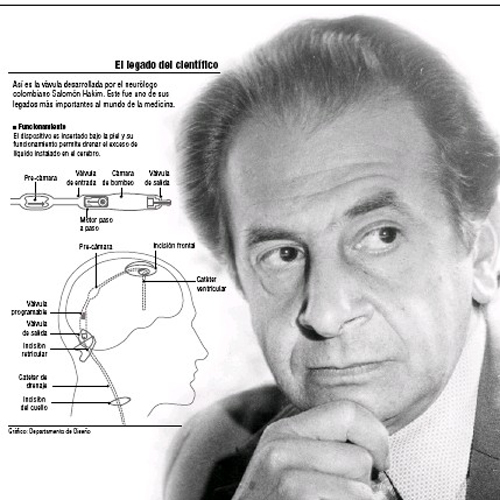
Colombia’s most widely cited medical invention is the Hakim valve, created by Barranquilla-born doctor Salomon Hakim as a solution for hydrocephalus. The device is implanted to drain excess fluid and regulate pressure in the brain, offering a practical fix for a condition the documentary estimates affects about 10,000 people in Colombia, with global prevalence cited at 1% to 1.5%.
Colombia’s trade-and-innovation profile adds that Hakim’s valve design was introduced to the medical community in 1966 and improved safety by incorporating pressure regulation. In practice, that means Colombia did not simply produce a medical accessory; it helped set a safer baseline for treating a condition that can otherwise become debilitating or fatal.
Colombia’s early pacemaker story is equally blunt in its origin: A heavy external device built to keep hearts beating when the alternatives were limited. The documentary credits a 1958 external pacemaker to physician Alberto Vejarano Laverde and engineer Jorge Reynolds, describing a 45‑kilogram apparatus powered by a 12‑volt battery and connected to the heart through electrodes.
The same source describes the device as successfully used in a 70‑year‑old patient, and it frames the later miniaturization of pacemakers as part of a broader global trajectory that followed early prototypes like this one.
Carlos Alban invented — but Colombia lost the credit
Colombia’s invention history is not limited to hospitals, and Carlos Alban is the clearest example of why recognition does not always follow first ideas. The documentary describes Alban as an engineer and diplomat from Popayan who developed calculations and designs for a dirigible, and it argues he did so before the Zeppelin became the European symbol of airship innovation.
The same source notes that Alban held patents in Washington, Paris, and Germany, and credits him with inventions including a universal clock and a “tricaoptic telescope.” It also places him in Hamburg in his diplomatic capacity, a detail that matters because it hints at how ideas can travel through networks long before they travel through brand names.
The Alban case highlights a recurring Colombian dilemma: Inventors make breakthroughs, but scaling and recognition often happen abroad. Today, the same issue shadows technology patents and prototypes that exist, yet global credit usually goes to whoever industrializes first.
3D Tissue printing could make Colombia export know‑how, not gadgets
One of the most contemporary items on the documentary’s list is 3D tissue printing, presented as part of Colombia’s technological frontier. The feature frames it as an approach that can print biological structures, a field tied to regenerative medicine and laboratory testing.
The implications are straightforward: If tissue printing can be scaled, it may transform how treatments are tested, ease reliance on limited donor material, and bring clinical applications closer to the lab. In that light, Colombia’s contribution isn’t just a consumer product; it’s knowledge and methods that travel: patents, protocols, and research capacity with global reach.
Abroad, Colombia is often seen mainly through its exports and tourism. Yet its work in biomedical innovation tells another story: a country capable of competing in advanced research when institutions provide steady support.
Eye‑tracking tech turns Colombian engineering into everyday freedom
The fifth invention on the documentary list is eye tracking, presented as an assistive technology designed to help people with quadriplegia interact with computers. In practice, that means turning eye movement into a functional interface for communication and control, a concept with obvious global relevance in disability access.
The documentary frames the device as a tool that restores autonomy to people who otherwise depend on others for basic digital tasks. This belongs beside the Hakim valve because both inventions spring from the same Colombian drive: Creating solutions that truly serve patients, even when resources are limited.