

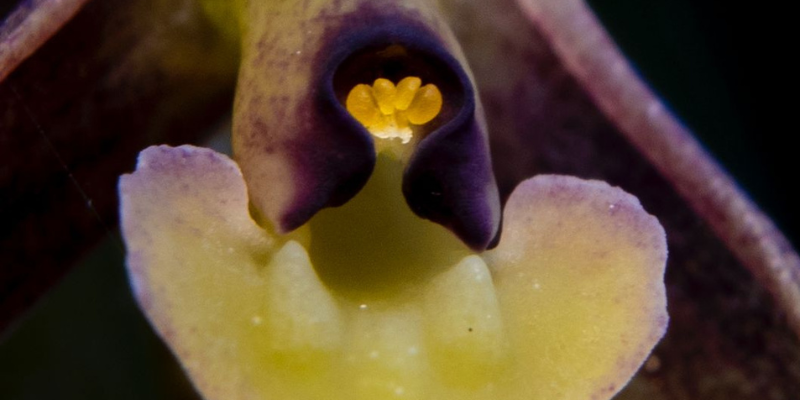
A new flower bloomed into scientific recognition with a new orchid species discovered in Colombia. The Epidendrum juaicaense made its debut in scientific literature, bringing fresh proof that Colombia’s cloud forests still hold botanical surprises. This discovery matters beyond just adding to species lists; it highlights why protecting Colombia’s wild places cannot wait.
A new orchid species named for the land
Biologist Luis Piña spotted the distinctive orchid in the Serranía de Juaica, a mountainous region near the municipality of Tenjo, Cundinamarca department. The new species features delicate green and purple petals that stand out against the darker forest backdrop.
Piña chose to honor the landscape’s muisca indigenous heritage, by naming it Epidendrum juaicaense, linking botanical science to indigenous roots. The muisca people held spiritual connections with nature for centuries, and this flower’s name carries that legacy forward.
Publishing findings in peer-reviewed journals separates genuine discoveries from speculation, and Piña’s work cleared that bar. The journal Icones Orchidacearum accepted and published the research in October 2025, confirming the orchid’s status as a new species.
Peer review means other orchid experts examined the data and agreed; this orchid was genuinely different from known varieties. The publication marks the moment when a local finding becomes global scientific knowledge.
En una reserva en la Serranía de Juaica, en Tenjo, Cundinamarca, descubrieron una nueva especie de orquídea y la nombraron en honor a ese lugar: Juaica (Epidendrum juaicaense, por su nombre científico). 🌺
— BIBO (@BIBOCol) October 13, 2025
👉 https://t.co/nqmgi8HjZv 🔗 pic.twitter.com/LFhHJjXdZf
Building a pattern of discovery
The Epidendrum juaicaense is not Cundinamarca’s first newly identified orchid; it is the third in recent years. In 2022, researchers published Pleurothallis mahechae in Harvard Papers in Botany, a dark wine-colored flower discovered with international expert Mark Wilson.
Then came Maxillaria maria-luisae in 2017, named to honor María Luisa Hincapié, a co-founder of the Forest of Orchids foundation. These three discoveries show Cundinamarca holds botanical treasures that science is still uncovering.
Luis Piña and María Luisa Hincapié founded Forest of Orchids more than 25 years ago in Tenjo. What started as a research mission evolved into something bigger; the foundation now combines scientific study with habitat protection and regenerative tourism.
Their work has earned recognition including environmental awards, the Golden Seal, the Cundinamarca Brand, and certification as a green and sustainable business. International attention validates what local researchers have known; this region deserves protection.
Fighting against extinction
The new orchid species lives in delicate mountain ecosystems that face constant pressure from human activity. Epidendrum juaicaense is already listed as endangered, meaning fewer plants survive in the wild with each passing year.
Without intervention, this flower could vanish before most people ever see it, becoming another lost species. Conservation requires action now, not promises for later.
Forest of Orchids invites anyone who cares about nature to join the protection effort through several pathways. The Forest Godparent Bonds program lets people financially support habitat protection and species recovery from home.
Regenerative tourism tours offer visitors a chance to see these orchids firsthand while funding their protection. These options mean supporting conservation does not require leaving your community.
Finding new species in 2025 proves that biodiversity still hides in unexplored forest corners waiting for discovery. Colombia ranks among the world’s most biodiverse nations, and holds the world’s largest number of orchid endemic species.
Each new orchid found strengthens the case for protecting the intact forests that remain. Science depends on having wild places left to study.