

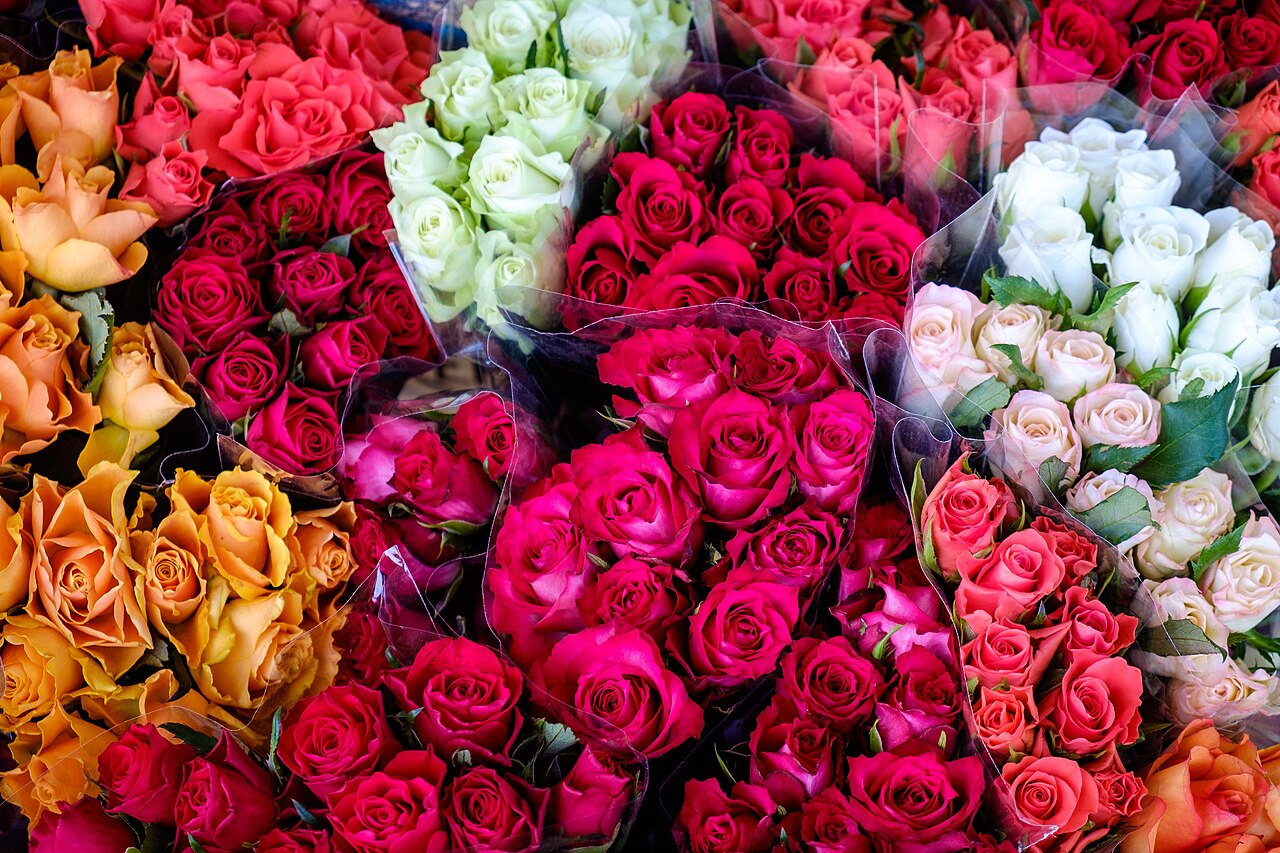
Colombian growers sent 65,000 tons of flowers to the United States by early February 2026, a 13% rise from 2025 that underscores the sector’s resilience amid trade uncertainties. Shipments from January 15 to February 9 captured peak demand, representing 20% of annual sales and sustaining 200,000 rural jobs.
Colombia’s flower varieties lead US imports
Such dominance rests on tailored production for US tastes, where Colombia accounts for over 1,600 varieties across 60 species grown near Bogotá’s savanna. Roses lead at 33% of exports, followed by carnations (12%), chrysanthemums (8%), and alstroemerias (5%) with their vibrant, long-lasting appeal. In Facatativá, hydroponic carnations thrive; long-stem roses over 60 cm make up 60% of output, alongside spray carnations and minis for premium pricing.
This diversity favors quality over sheer bulk. Colombia holds the global lead in carnations, ensuring steady US inflows. Over 50% of Valentine’s stems carried the 29-year Florverde sustainability seal, drawing more than 50% of water from rainwater collection to meet buyer standards.
Asocolflores reports these shipments equated to roughly 900 million stems, mobilized via 1,400 air flights and sea routes from four major ports—92% by air for freshness. This logistics network, refined over decades, ensures 60% of US Valentine’s bouquets are Colombian. Rainwater collection supplies over 50% of water in certified farms, aligning with buyer demands for low-impact production.
#AgroExports | Millions of Colombian roses reached the U.S. for #ValentinesDay, but economic challenges are putting pressure on the world’s second-largest flower exporter. #Colombia shipped about 65,000 tons of blooms from Jan. 15 to Feb. 9. https://t.co/ue4UA53JWt
— BizRepublic.com (@BizRepublicNews) February 11, 2026
Floral lifeline sustains rural economies
The Valentine’s surge consolidates gains from a sector that generated US$2.3 billion in 2024 exports, up 12% year-over-year and claiming 15% of agricultural GDP. Direct jobs number 110,000, with indirect roles adding 90,000 more; women fill 60% of positions, including 55% of mothers heading households. Operations cover 116 municipalities, as Asocolflores data shows.
Roots stretch over 60 years, formalized by post-2012 free trade pacts that eliminated most tariffs. The Colombian Agricultural Institute inspected 900 million stems, shipped 92% by air and 8% by sea to the US, UK, Chile, Japan, and Australia. However, structural barriers like market access persist.
Future growth balances opportunities, risks
Officials now target Asia and the Middle East, leveraging certifications and digital chains to cut delays. ProColombia reports the US absorbing 79% of exports at US$1.6 billion, Canada US$67.7 million, and UAE up 77.5% last year. Growers in Tocancipá’s Ayurá eye Korea and Japan to hedge US dependence.
Skeptics, however, flag tariff risks under President Trump; recent disputes tested the free trade deal, resolved swiftly but requiring vigilance. Peak seasons like Mother’s Day add 15% sales, supporting year-round stability. The truth is, Colombia’s flowers color global celebrations, with Valentine’s previewing leadership amid evolving trade dynamics. Rural families depend on this adaptability.