

Colombia, renowned for its stunning biodiversity, is home to an array of curious species that capture the imagination of nature lovers and researchers alike. From amphibians with vivid colors to unique mammals with fascinating behaviors, Colombia’s diverse ecosystems harbor some of the most unusual animals on the planet. Here are five curious animals from Colombia that showcase the country’s natural wealth.
Glass Frog (Hyalinobatrachium aureoguttatum)
The glass frog is a tiny, elusive amphibian found in Colombia’s humid rainforests, particularly in the Choco and Magdalena regions. What makes this species extraordinary is its almost transparent skin on the underside, revealing its internal organs. This remarkable adaptation helps it blend into its surroundings, avoiding predators. The upper part of its body is usually lime green with yellow spots, making it difficult to spot among the leaves.
Despite its unique appearance, the glass frog is facing threats from habitat destruction and climate change. It thrives in pristine environments, so deforestation and pollution pose significant dangers to its survival. Conservationists are working to preserve its habitat, ensuring these frogs continue to enchant future generations with their ghostly appearance.

Giant Anteater (Myrmecophaga tridactyla)
The giant anteater is a unique mammal that roams the grasslands and forests of Colombia. Distinguished by its long, bushy tail and elongated snout, this fascinating creature feeds primarily on ants and termites, using its sticky tongue that can extend up to 60 centimeters to capture its prey. Its powerful claws are adapted for digging into ant mounds and tearing apart termite nests, making it a critical species for controlling insect populations in its habitat.
This solitary animal is under threat due to habitat loss, road accidents, and hunting. As human development encroaches on its territory, the giant anteater’s numbers have dwindled. Conservation efforts are focused on protecting its habitats and reducing human-wildlife conflict to ensure the survival of the peculiar mammal.
Blue-billed Curassow (Crax alberti)
The blue-billed curassow is a critically endangered bird species endemic to the Caribbean region of Colombia. This large bird, which can reach up to 90 cm in length, is distinguished by its bright blue bill, which contrasts with its black and white plumage. It inhabits lowland tropical rainforests, especially in remote and hard-to-reach areas, making it difficult to study and conserve. Its diet includes fruits, leaves, and invertebrates, playing a key role in seed dispersal within its ecosystem.
Classified as a critically endangered species by the IUCN Red List, the blue-billed curassow is found in areas such as the Sierra Nevada de Santa Marta, the Sinú Valley, and the Magdalena River. Although its population has declined, it is estimated that between 1,000 and 2,500 individuals remain, according to the most recent data from 2016.
Blue Anole (Anolis gorgonse)
The blue anole, native to Colombia’s Gorgona Island, is a small but stunningly colored lizard known for its bright blue hue. This coloration is rare among anoles and makes the blue anole a highly sought-after species for herpetologists and reptile enthusiasts. Unlike other anoles that often display more subdued colors for camouflage, the vivid blue of the blue anole likely serves as a signal for attracting mates or deterring competitors.
However, the blue anole is critically endangered due to its limited habitat range and the introduction of invasive species like rats, which prey on the lizards. Conservation measures on Gorgona Island aim to protect the blue anole’s habitat by controlling invasive species and promoting the restoration of its natural environment.
Silky Anteater (Cyclopes didactylus)
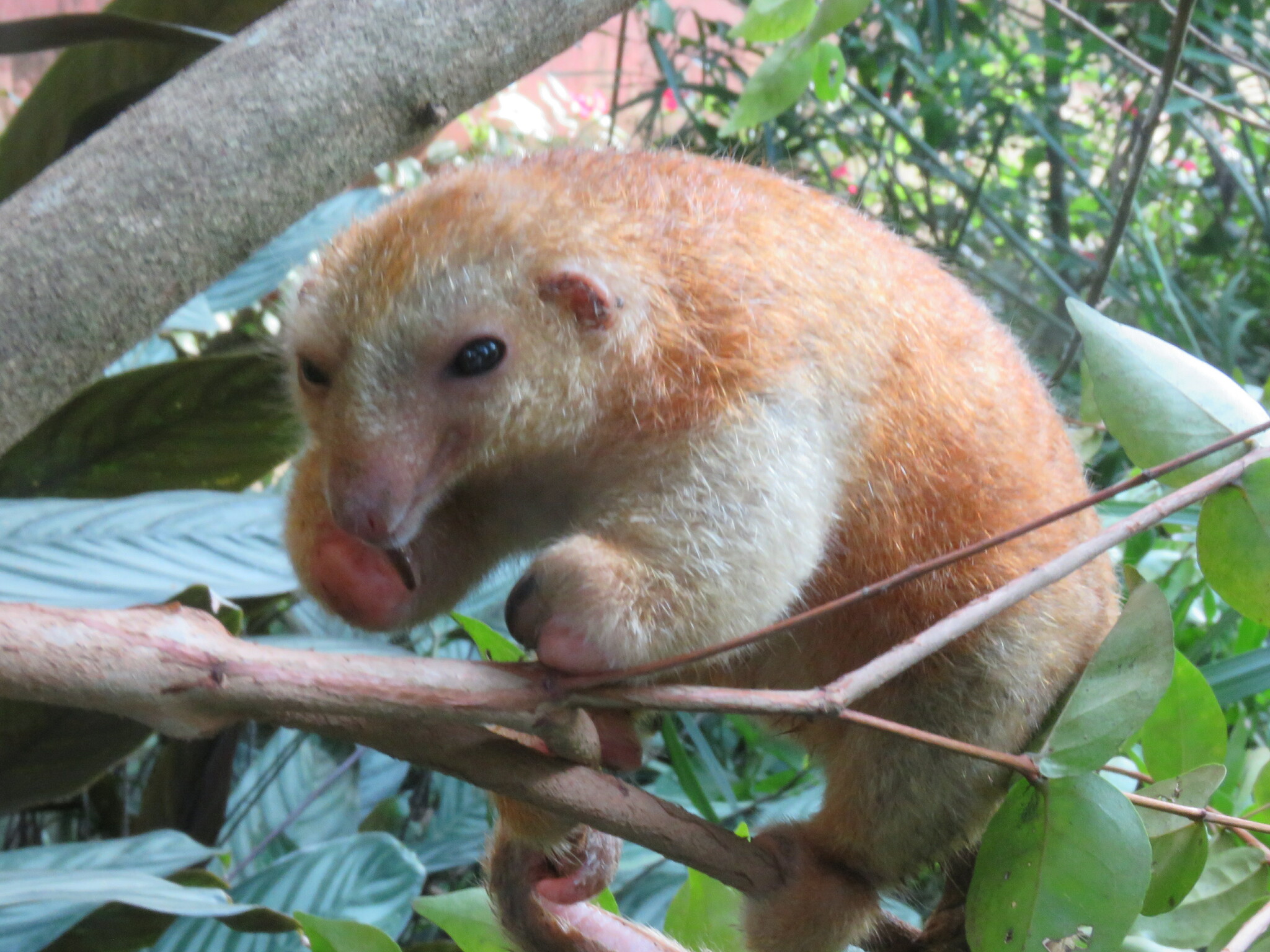
The silky anteater, also known as the pygmy anteater, is the smallest of all anteater species found in Colombia’s dense forests. Weighing less than a kilogram, this nocturnal creature is known for its soft, silky fur that blends in with the tree branches where it spends most of its life. It uses its prehensile tail to navigate the canopy and feeds mainly on ants and termites, much like its larger relatives.
Because of its small size and elusive nature, the silky anteater is rarely seen and is considered a “hidden gem” of the Colombian Amazon. Its survival is threatened by deforestation and habitat fragmentation, which reduce the availability of its food sources. Conservation efforts are focused on preserving its forest habitats to ensure this unique species continues to thrive.
Related: Five Species Unique to Colombia